![tradable-bits-long-logo-for-download.png]](https://resources.tradablebits.com/hs-fs/hubfs/tradable-bits-long-logo-for-download.png?height=40&name=tradable-bits-long-logo-for-download.png)
How SMS Messaging Campaigns Work: Segments, Bytes, and Media
The SMS industry still operates on telecommunications standards established decades ago. Unlike digital apps or email clients that treat a message as a single block of text, cellular networks process and bill messages based on segments.
-
Bytes & Segments: Text messages are transmitted across carrier networks in 140-byte chunks known as segments.
-
SMS vs. MMS Differences:
-
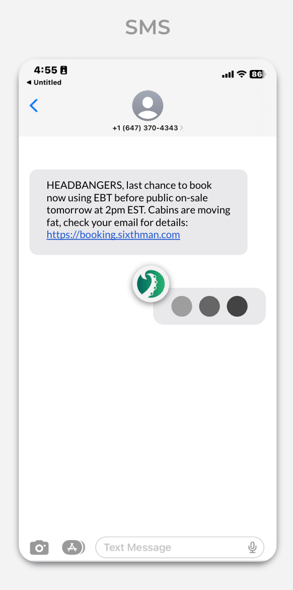
SMS (Short Message Service): Standard text-only messaging using plain text, numbers, punctuation, and links. Billed per segment.
-
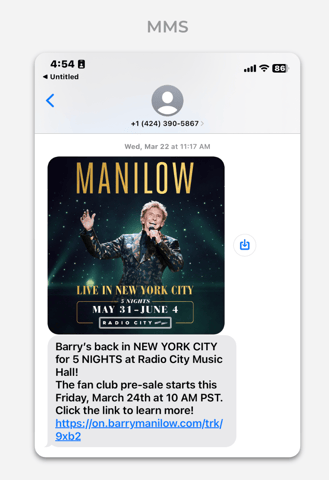
MMS (Multimedia Messaging Service): Rich media messaging that allows attached images, GIFs, or videos over cellular networks. Billed at a flat rate per message with higher capacity for text.
-
-
The Character Limit Trap: Standard plain text allows 160 characters per segment. Once you go over 160 characters, cellular networks split the message into multi-part segments (allotted at 153 characters per segment to reserve space for routing headers).
-
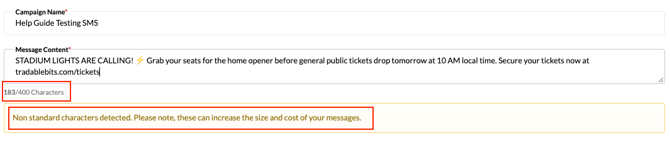
The Emoji Risk (Unicode): Adding emojis, accented letters, or special characters like curly quotes or backticks forces the message format to switch to UCS-2 (Unicode) encoding. This drops your single-segment limit down to just 70 characters, causing multi-segment counts to increase quickly. 💸
Character & Cost Conversion Reference
| Encoding Type | Character Length | Special Characters/Emojis? | Billed Segments per Recipient |
| GSM 7-Bit | 1-160 characters | No | 1 Segment |
| GSM 7-Bit | 161 – 306 characters | No | 2 Segments |
| UCS-2 (Unicode) | 1-70 characters | Yes (e.g., 🏈, 🎶, 😄) | 1 Segment |
| UCS-2 (Unicode) | 71-134 characters | Yes (e.g., 🏈, 🎶, 😄) | 2 Segments |
| UCS-2 (Unicode) | 135-201 characters | Yes (e.g., 🏈, 🎶, 😄) | 3 Segments |
Infrastructure, Destination Rates & Billing Structure
The destination markets you're sending to, and rate model, go into determining your final campaign cost:
- Destination-Based Pricing: Carrier termination and gateway fees vary greatly by country. Cross-border or international sends outside your domestic database region will incur varied per-segment surcharges. Check out the Tradable Bits Default SMS Rates for details.
- Pay-As-You-Go vs. Bulk Packages: Standard pay-as-you-go billing operates on transparent monthly invoicing per segment, while tiered bulk packages lower your per-segment costs as your database scales. For more on this, please get in touch with your Customer Success Manager or support@tradablebits.com.
Checklist for Managing Sending Spend
- Review your character count and alerts about non-standard characters: In the Tradable Bits SMS Planner, you can see how many characters you have, as well as an alert message if you are using any non-standard characters or emojis.
- Test your text copy using an SMS character counter: To identify any sneaky unintended non-standard characters, paste your copy into an online analyzer like the SMS Character Counter before sending. This will help you catch hidden Unicode triggers that increase your sending costs.
Note: Be careful with copying and pasting your SMS text between different apps or programs, as this can inadvertently change the formatting of certain characters, like straight quotation marks into curly quotation marks, and so forth.
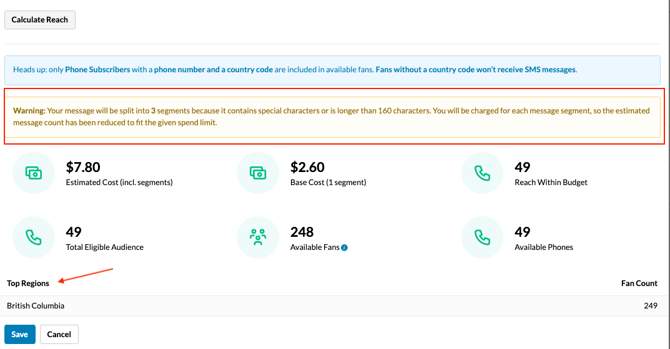
- Review Destination Breakdown: In the SMS Planner, calculate your reach to see your segment count and target audience's geographic locations to account for country-specific carrier rates before budgeting large campaigns. If you have fans located outside of the region you wish to send to, we'd recommend creating a new audience filtered by location to use instead.
- Use Branded Custom Virtual Domains: Avoid generic link shorteners, which can trigger carrier spam filters and increase your character length. Ensure your custom virtual domains are configured with Tradable Bits to keep link character counts predictable.
- Audit Emojis & Punctuation: If an emoji increases your message from 1 segment to 2 or 3, consider whether the higher visual impact justifies doubling your campaign segment cost.
There you have it; you now have everything you need to keep your SMS costs manageable while leveraging the powerful effects of SMS marketing. Happy sending!
Still need assistance? Please reach out to your Customer Success Team or contact support@tradablebits.com